
The Problem
Understanding Period Poverty
Period poverty refers to the lack of access to menstrual hygiene products, safe sanitation facilities, and accurate information about menstrual health. It is a widespread issue that affects millions of girls and women, particularly in under-resourced communities. However, beyond the lack of products, period poverty is also deeply connected to social stigma and cultural silence surrounding menstruation.
In many cases, girls grow up without proper knowledge about their own bodies, leading to confusion, fear, and unsafe practices. Limited access to products means they are often forced to use alternatives that may not be hygienic or comfortable. At the same time, stigma prevents open conversations, making it difficult for them to seek help or guidance.
This issue has far-reaching consequences. It can impact a girl's physical health, emotional well-being, and overall confidence. It also affects participation in daily life, including school and social environments, where the lack of support can make menstruation a challenging experience rather than a manageable one.
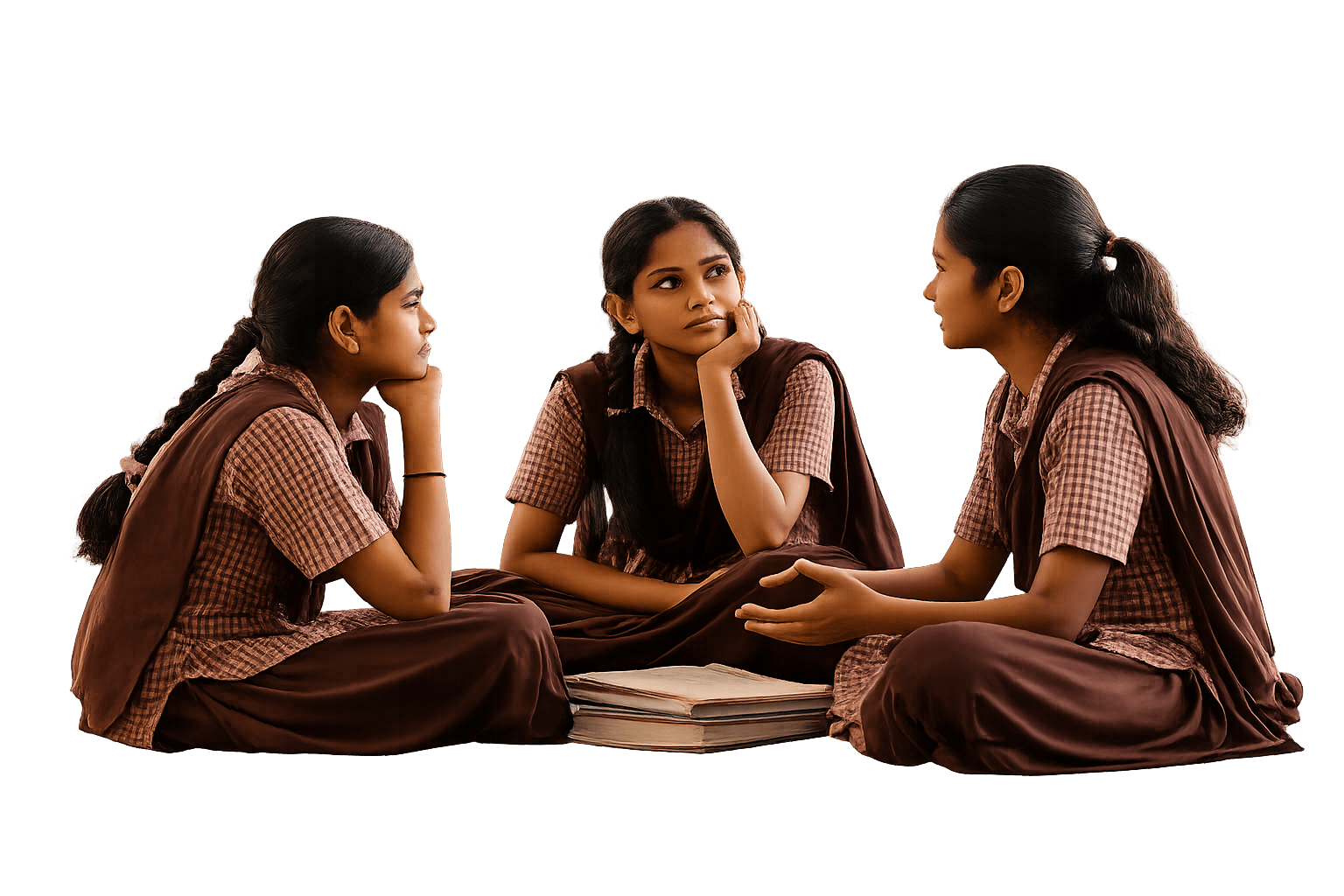
Global Facts & Evidence
- ✦
500 million people who menstruate globally lack access to menstrual products and adequate facilities to manage their periods.
- ✦
~2.1 billion women and adolescent girls menstruate worldwide.
- ✦
~1.8 billion people menstruate every month around the world.
- ✦
Gender inequality, poverty, stigma, and lack of sanitation facilities continue to prevent millions from managing menstruation safely and with dignity.
India Facts & Evidence
- ✦
Nearly 23 million girls in India are estimated to leave school annually due to period-related challenges and inadequate menstrual hygiene management.
- ✦
~71% of girls in India report having little or no knowledge of menstruation before their first period.
Visualising the scale of the problem
girls in India leave school each year due to period-related challenges
people who menstruate globally lack access to products and facilities
Addressing period poverty requires more than distributing products — it requires changing perceptions, increasing awareness, and creating sustainable solutions. By combining education with access and long-term skill-building, it is possible to create an environment where menstruation is understood, supported, and no longer a source of limitation.